
Check what “by the sea” actually means
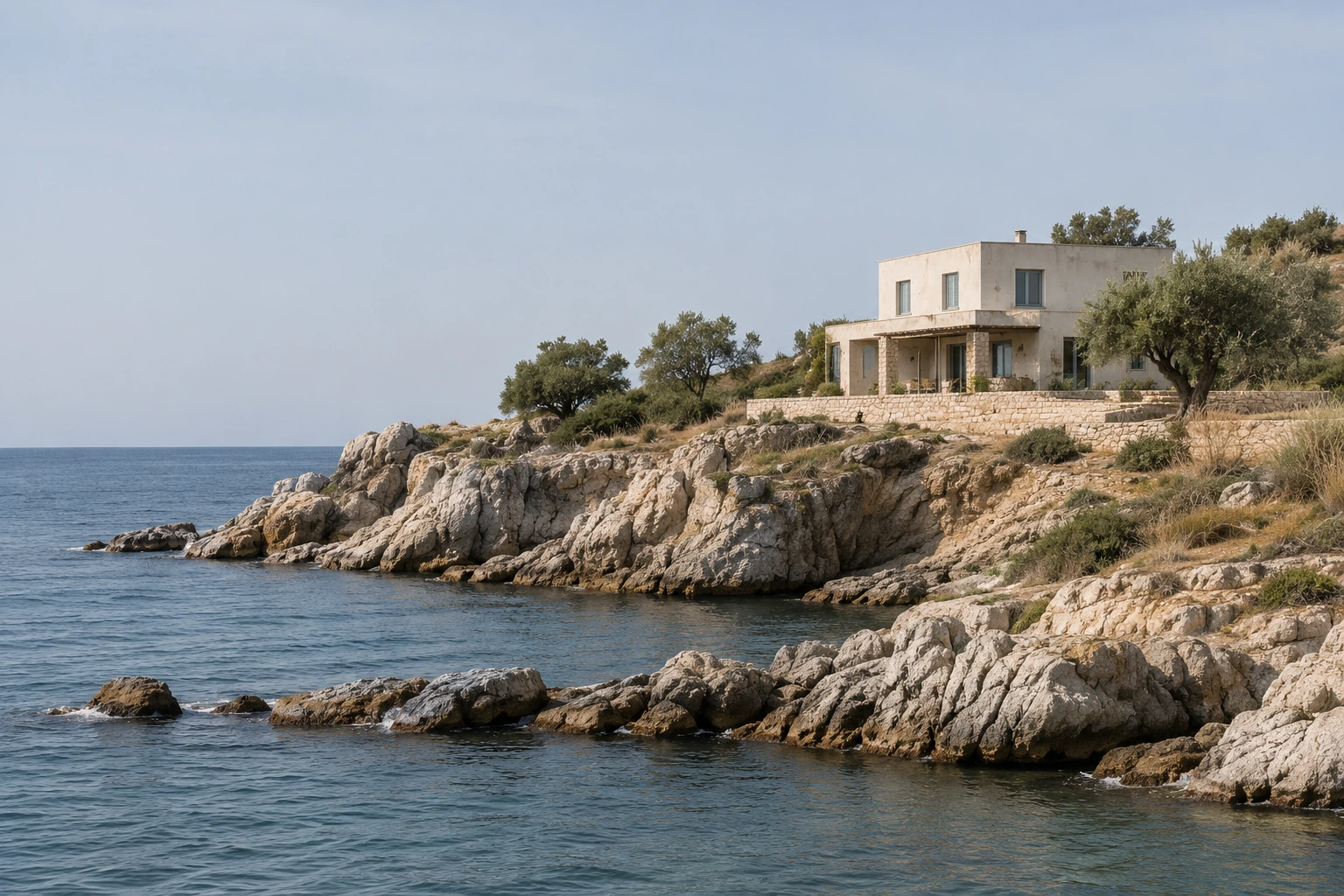
Walk from the building entrance to the point where you can genuinely use the shore. Notice steps, busy roads, lighting and gradients. A short distance on a map can mean an awkward route with shopping, a pushchair or beach equipment.
Establish whether access follows a public road, passes through the complex or crosses someone else’s land. If access depends on a particular legal right, ask your lawyer to confirm it. Do not equate a bay view with the right to use a private jetty, beach service or neighbouring swimming pool.
Assess exposure and areas that need repairs
During the viewing, inspect railing fixings, window fittings, metal air-conditioning components and places where water collects. Rust, peeling paint or damaged seals are reasons to ask about maintenance. Their cause and the necessary work should be assessed by a technical specialist, not by the seller from a photograph.
Ask about previous leaks, roof and terrace repairs, and access to drains. Fresh paint does not explain a history of damp. Request invoices and photographs of completed work. Record any inaccessible areas during the inspection; being unable to check them does not mean they are in good condition.
Return at a different time of day
Check the sunlight in the living room and on the terrace in the morning and late afternoon. Can you sit in shade? Do closed windows reduce noise? Is the balcony comfortable in windy conditions? Also assess restaurant equipment, delivery routes and neighbouring lights in the evening.
If you plan to live there permanently, ask residents to describe a winter week and check year-round shops and services. A visit outside the holiday season is more useful than a general assurance that the area is lively all year. Record what you have seen yourself and what you know only from other people’s accounts.
Calculate the costs after you return to Poland
Request annual bills and a breakdown of communal charges, but also ask how many people occupied the property and during which months. Comparing bills without considering usage can easily be misleading. Separate fixed charges from energy, cleaning, equipment servicing and minor repairs.
For an empty apartment, arrange for someone to check it after heavy rain or strong winds. Check the policy conditions for extended absence and any requirements for securing installations. Put the garden, private pool and large terrace into a separate maintenance plan rather than assuming they are covered by the basic management charge.
Separate the location assessment from property rights
For a purchase in the area controlled by the Republic of Cyprus, documents and the plot plan are checked through the relevant DLS procedure. In the north, disputed land rights require additional assessment; an attractive shoreline does not reduce the risk of claims. In either case, ask for the development potential of neighbouring plots to be checked.
Before deciding, compare two or three addresses using the same criteria: access, noise, shade, technical condition, annual costs and documentation. You do not have to choose a property without a single drawback. You need to know which compromises you accept and what it will cost to use the place as you envisage.
Also inspect where you will dry laundry, store equipment and walk from the parking area in the rain. These may seem like small details during a viewing, but repeated everyday tasks will affect the comfort of your home far more often than your first impression.
This guide is for general information. Ask an independent professional qualified in the relevant jurisdiction to check the property’s circumstances and current legal and tax requirements.